
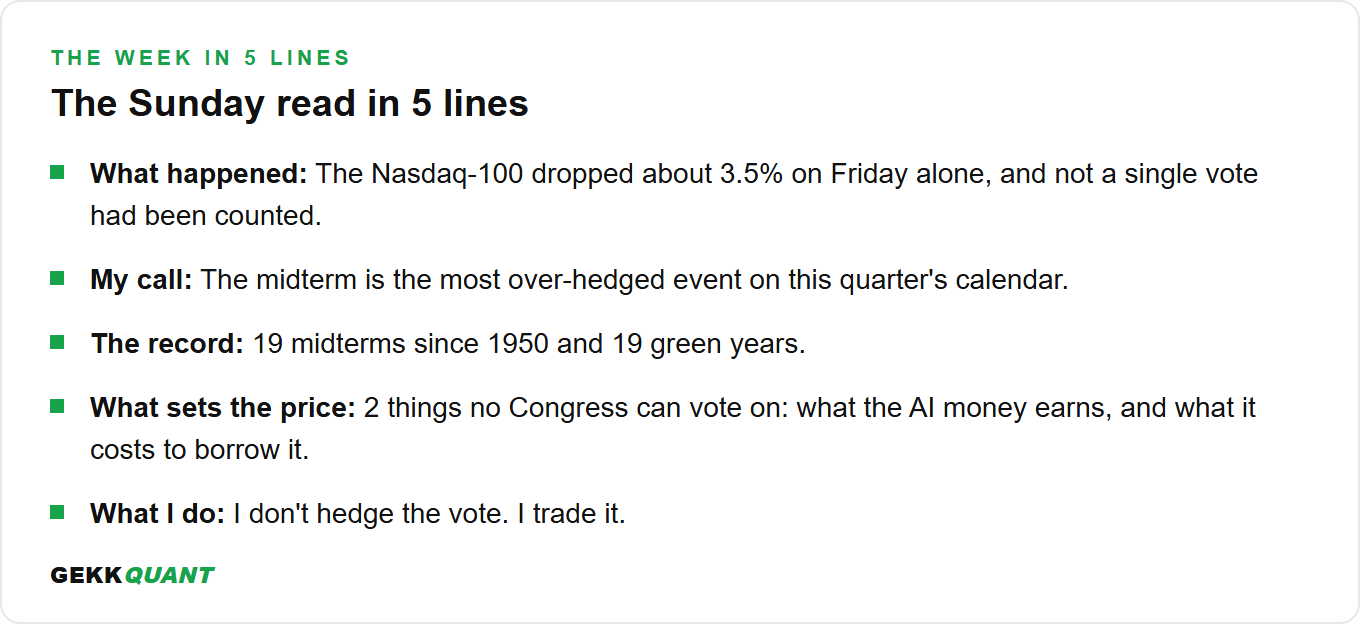
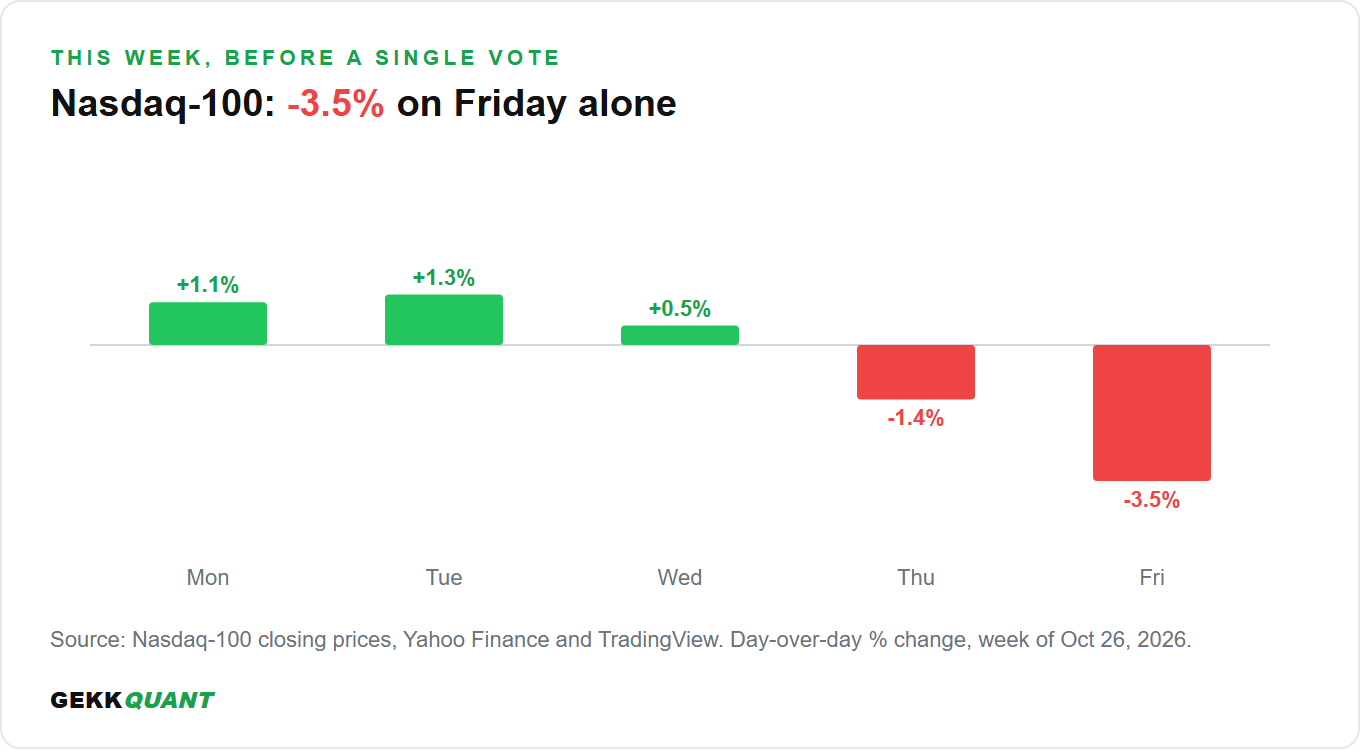
Before you pay up for protection into Tuesday night, take a hard look at what actually knocked your Nasdaq over this week. The Nasdaq-100 dropped about 3.5% on Friday alone, and not a single vote had been counted.
Here's my call, and I'll own it: the midterm is the most over-hedged event on this quarter's calendar. A Democratic House buys subpoenas and hearings, not the earnings line. What's repricing the index is the AI funding bill.
The bear case, fairly stated
Quoth the Raven and Capital Flows argue that a Democratic House would hand subpoena power to people keen to dig into crypto, private credit and the AI boom. Fair enough: a chairman can make a CEO's spring miserable. But a gavel can't pass a law alone, the president keeps his veto pen, and a hearing makes a headline, not a margin. What holds up these multiples is the growth path of AI revenue and the rate you discount it at, and neither sits in a committee room.
The experiment we have already run
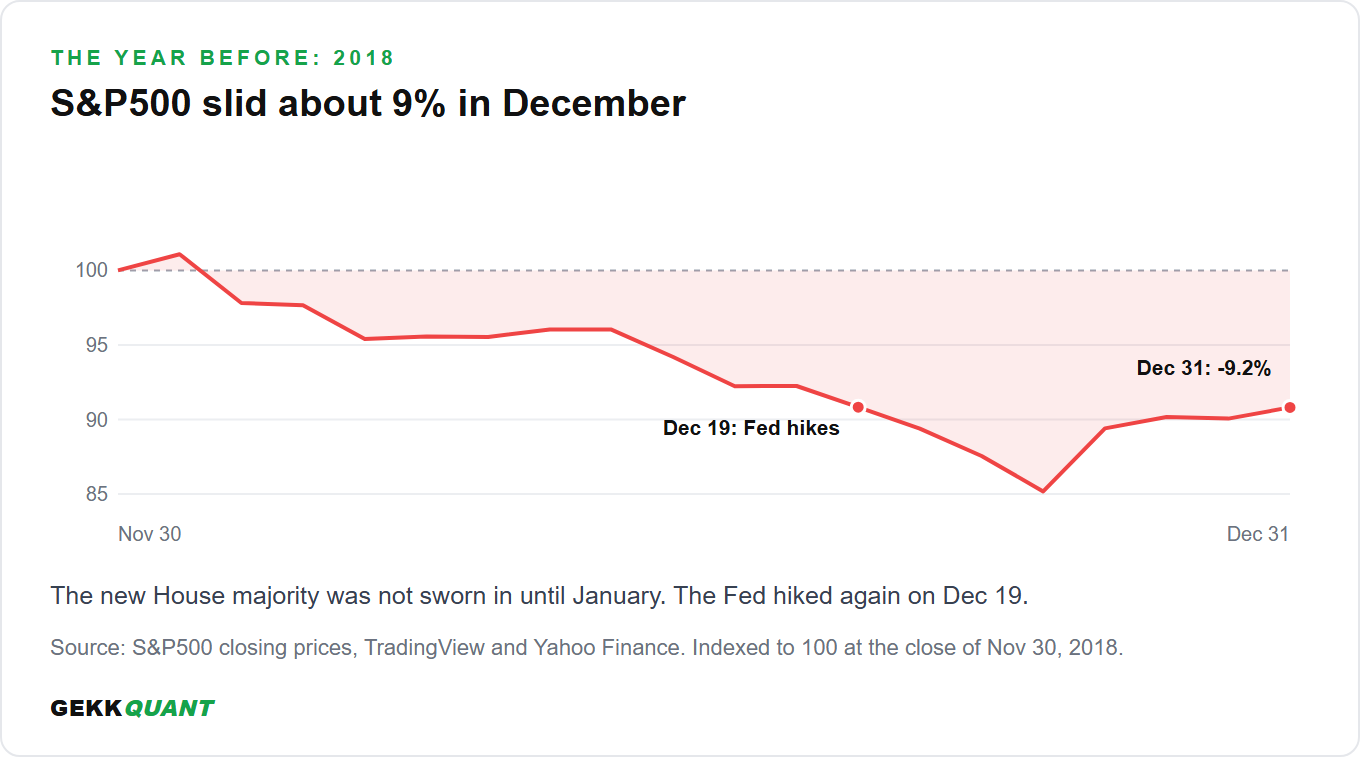
In 2019 the Democratic House investigated everything that moved and impeached the president a week before Christmas. The Nasdaq Composite finished that year up about 35%. In December 2018, right after the Democrats won the House, the S&P500 slid about 9%, but the new majority wasn't even sworn in. The Fed hiked again on December 19. The vote got the blame; the price of money did the damage.
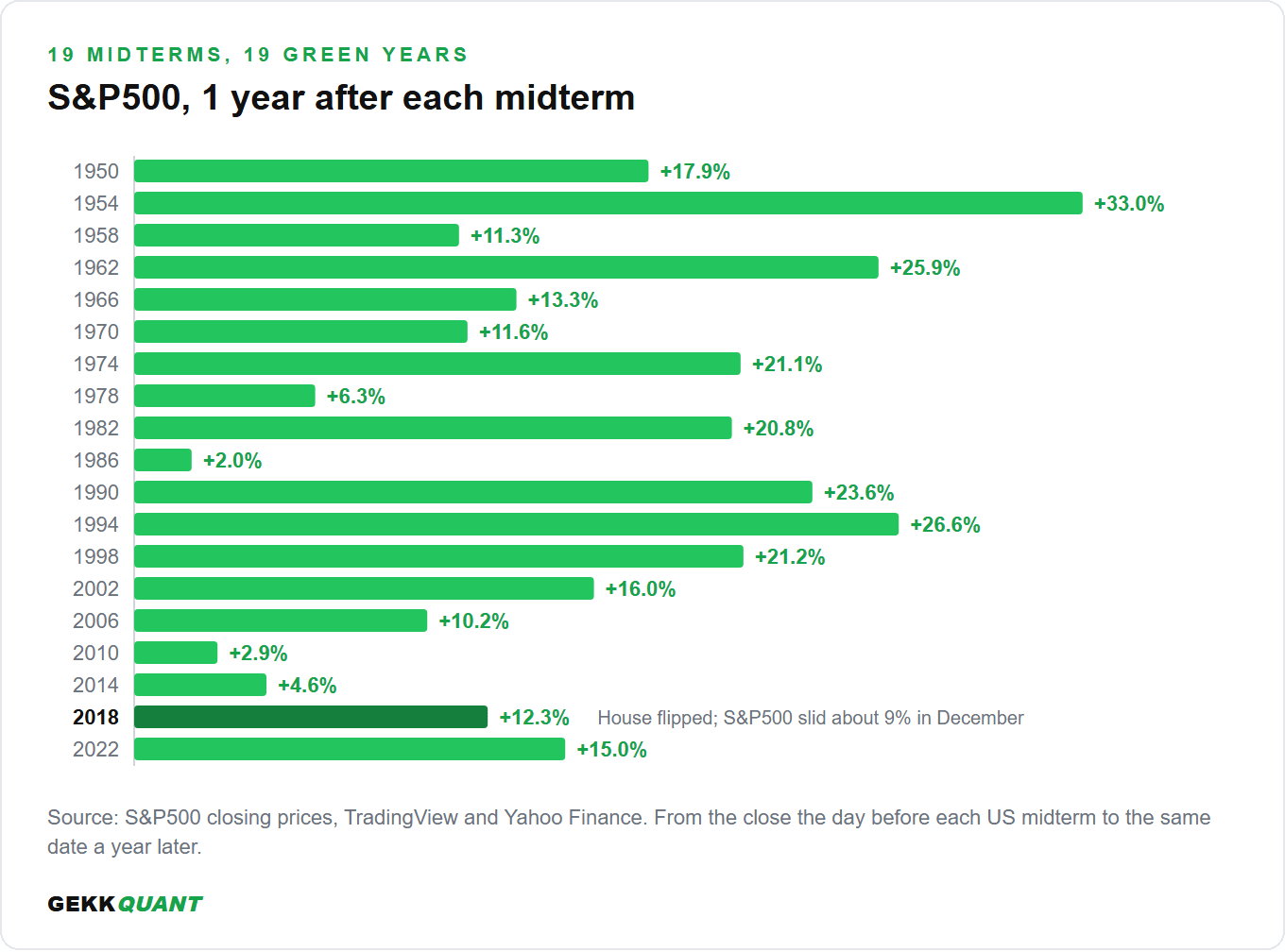
Measure the S&P500 from the day before each midterm to the same date a year later: 19 midterms since 1950, 19 green years, whichever party won. Before a vote, money pays for uncertainty. Once the result is in, that premium gets handed back. Gridlock finishes the job: 2 years in which Washington can't do much of anything are 2 years in which it can't do much damage either.

What really moves the price
Think of an election as a catalyst, not a reagent. It changes how fast a reaction gets where it was going, never where it ends. Where this one ends is set by 2 things no Congress can vote on: what the AI money earns, and what it costs to borrow it.
This week showed it. Alphabet posted its biggest single-day percentage drop on record on Thursday, Meta lined up a record $97.5 billion raise, and Microsoft is reportedly heading back to the US bond market for the first time in more than 9 years. Treasuries rallied while tech fell: a growth scare, not a political one. That's the AI bill coming due in public, the same bill the index has been booking as somebody else's profit.
And nobody's walking into Tuesday blind: the street's base case is already a narrow Democratic win and gridlock. When everybody leans the same way, the surprise is how little the expected result changes.
So I don't hedge the vote; I trade it. Size down for the thin overnight session, and if NQ gets washed out Wednesday morning, I'd rather buy that panic than sell it. The dates that matter come after: Nvidia's results in mid-November and every Fed speaker on the calendar.
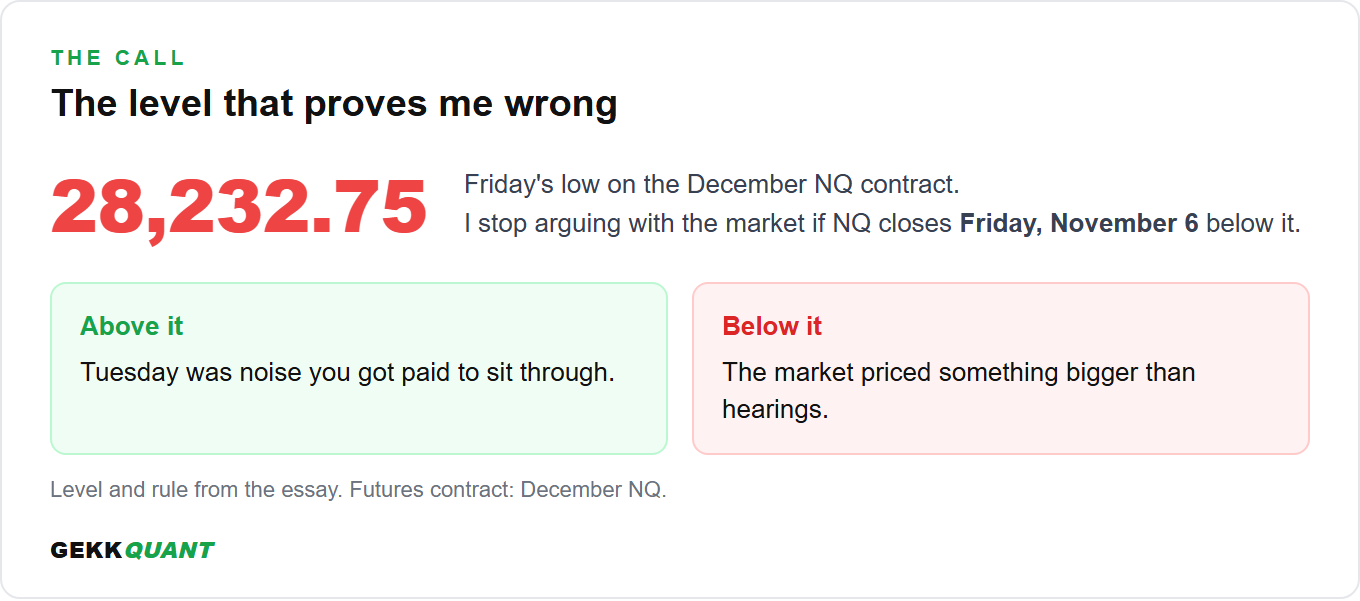
Here's where I'm wrong: if the December NQ contract closes on Friday, November 6, below its October 30 low of 28,232.75, the market priced something bigger than hearings, and I'll stop arguing with it.

Voters pick the committee chairs. Earnings pick the price.
Everything you need, the weekly futures signals included, sits in one place: https://whop.com/gekkquant/.